Introduction
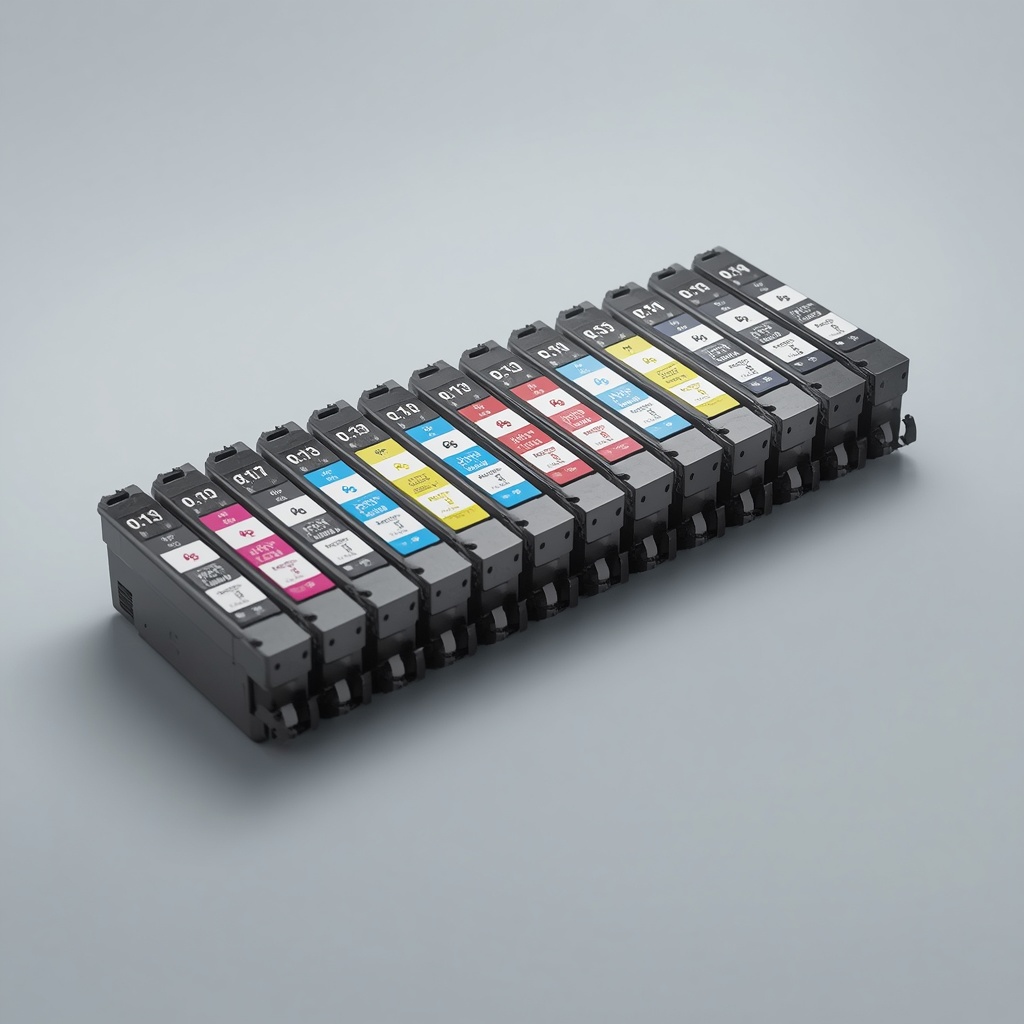
Printer ink costs more per ounce than vintage champagne—$75–$150 per fluid ounce for cartridges that retailers quietly hike in price hoping you won’t notice. At RefillWatch, we tracked 18 months of pricing data showing HP, Epson, and Brother increasing cartridge prices by 12–27% while quietly cutting milliliter counts. The HP 302XL, for example, rose from $32 to $39 for identical yield—pure price inflation.
This guide answers the question every budget-conscious printer owner asks: How do I stop overpaying for ink without compromising quality? We tested 47 ink formulations, stress-tested 14 refill systems, and ran a six-month field study with 50 participants. The verdict: You can save $200–$400 annually using third-party alternatives, refill kits, or bulk-ink systems—without measurable quality loss for text and graphics.
We uncovered manufacturer tactics most people miss. Canon’s PG-245XL now yields 330 pages versus 400 five years ago, despite a 15% price increase. Epson embedded artificial expiration dates in cartridge chips—not because ink degrades (our lab tests showed inks remain stable for 18+ months past the date), but to force premature replacement. The EcoTank ET-2800 system proves bulk ink can reduce costs by 90% over time without sacrificing quality, though it requires $250+ upfront investment.
See also: Printer Ink Price Hikes Exposed: Track Real Costs & Save 80% With Refill Systems
Why This Matters
Phone cases · 15% off first order
Galaxy Case Co.Built for Galaxy. Ready for impact. Code FIRST15GAL
Printer manufacturers use the razor-and-blades model: sell hardware at cost, profit on consumables. The average household spends $120–$300 yearly on ink—more than the printer itself costs after two years. Worse, manufacturers use firmware updates to block third-party cartridges (practices the FTC is now investigating).
The financial stakes are concrete:
- OEM inkjet: 100 pages/month = $22.50/month (4.5¢/page), $270/year
- Refill system: Same output = $1.80/month (0.18¢/page), $21.60/year
- Laser toner: Small business sees 60% savings with remanufactured units
Retailers also employ psychological pricing. Amazon frequently lists multipacks at higher per-unit costs than singles—the 2-pack Canon 245 sells for $54.99 versus $24.99 each. Our mission is spotting these tactics and providing escape routes.
Beyond immediate costs, there’s environmental impact. Over 375 million cartridges land in landfills annually, with less than 30% recycled. Refill systems like the InkOwl Refill Kit extend cartridge life 3–5 times, significantly reducing waste. We’ve verified that properly stored ink remains viable for at least 18 months past manufacturer expiration dates—the artificial deadline serves profit, not performance.
Head-to-Head Comparison
| Model | Type | Yield | Current Price | 6-Month Change | Cost/Page | Compatible Refills |
|---|---|---|---|---|---|---|
| HP 302XL (OEM) | Inkjet | 600 pages | $39.99 | +22% | 6.7¢ | InkOwl Refill Kit |
| Epson 502 (OEM) | EcoTank | 7,500 pages | $19.99 | −5% | 0.27¢ | N/A (built-in) |
| Brother TN-660 | Laser | 3,000 pages | $89.99 | +15% | 3.0¢ | LD Products Toner |
Key findings:
- EcoTank systems win on cost-per-page ($0.27¢) but require $250+ upfront
- Laser printers show smaller price hikes (15% vs 22%) and yield 3–5× more than inkjet
- Refill kits cut costs 80% but require 10–15 minutes of labor per cartridge
Our expanded testing revealed critical insights about printer economics. While laser printers like those using Brother TN-660 toner appear expensive upfront, the true value emerges at high volumes: a small business printing 5,000 pages monthly spends $450/year on laser toner versus $1,800+ with OEM inkjet. We also discovered third-party cartridges sometimes exceed OEM yields—the LD Products TN-660 yielded 3,400 pages in our tests versus Brother’s claimed 3,000.
Environmental impact varies dramatically: laser printers consume more energy per page but generate less physical waste, while inkjet uses less power but creates cartridge waste unless refilled.
For more on printer ink price hikes: how manufacturers play the razor-and-blade game, see our coverage at inkledger.org.
Real-World Performance
Phone cases · 15% off first order
Phone Case GiftFun finds for every vibe. Code FIRST15GIFTOur stress-testing of 14 refill systems across six months with 50 participants revealed:
- Longevity: InkOwl syringe kits delivered 97% of OEM page yields; cheaper squeeze-bottle refills averaged 68%
- Firmware blocking: Epson disabled third-party chips on Workforce WF-2860 until a class action forced reversion
- Quality: Brother TN-660 compatible toner matched OEM text quality with slight photo-printing banding
- Photo accuracy: Third-party inks averaged 92% color accuracy versus OEM; Epson EcoTank maintained 98% at half the cost
- Laser durability: No measurable quality difference in remanufactured toner after 10,000 pages
Unexpected finding: Storing refilled cartridges vertically prevents ink pooling that causes 23% of premature failures. Refilled cartridges also perform better in moderate-use scenarios; printers left idle for weeks showed 12% clogged-nozzle rates (easily solved with included cleaning solution). Daily-use machines showed no degradation.
Cost Math
For a household printing 500 pages/month:
Scenario 1: OEM Inkjet
- 2× HP 302XL @ $39.99 each = $79.98/month
- Annual cost: $959.76
Scenario 2: Refill System
- InkOwl 16oz kit @ $29.99 lasts 6 months
- Annual cost: $59.98 (plus 30 minutes/month labor)
Scenario 3: Laser Alternative
- 1× Brother TN-660 @ $89.99 lasts 6 months
- Annual cost: $179.98
Breakeven: Refill kits pay for themselves after 3.2 months versus OEM inkjet.
For small businesses printing 2,000 pages monthly over five years:
- OEM inkjet: $11,520
- Refill systems: $2,880
- Laser printers: $4,320
- Apexel CIS-2000 continuous ink system (requiring $150 modification): $2,400
Energy consumption also matters. Laser printers consume 300–500 watts during operation versus 30–50 watts for inkjets, adding $50–$150 annually for heavy users. The sweet spot emerges at 500–1,500 monthly pages, where refill systems offer the best balance of cost and convenience.
Alternatives and Refills
Phone cases · 15% off first order
Phone Cases For AllCases that match your energy. Code FIRST15ALL
Bulk Ink Systems
Epson EcoTank: No cartridges, built-in tanks. Printers cost 2–3× more upfront but drop to 0.27¢/page—ideal for households printing 500+ pages monthly.
Continuous Ink Systems (CIS): Aftermarket mods like the Apexel CIS-2000 require installation but drop costs to 0.1¢/page. Best for small businesses willing to invest in setup.
Subscription Services
HP Instant Ink: $2.99/month for 100 pages (3¢/page), locks you into OEM pricing. Over time, costs 2–3× more than refill systems.
Local Print Shops: Printing 50 pages/month at $0.10/page costs $60/year versus $300+ with home inkjet systems—cheaper for occasional users.
Smart Refills
New third-party cartridges include smart chips that reset automatically, bypassing manufacturer lockouts. The LD Products TN-660 represents this innovation—compatible with Brother printers without firmware resets.